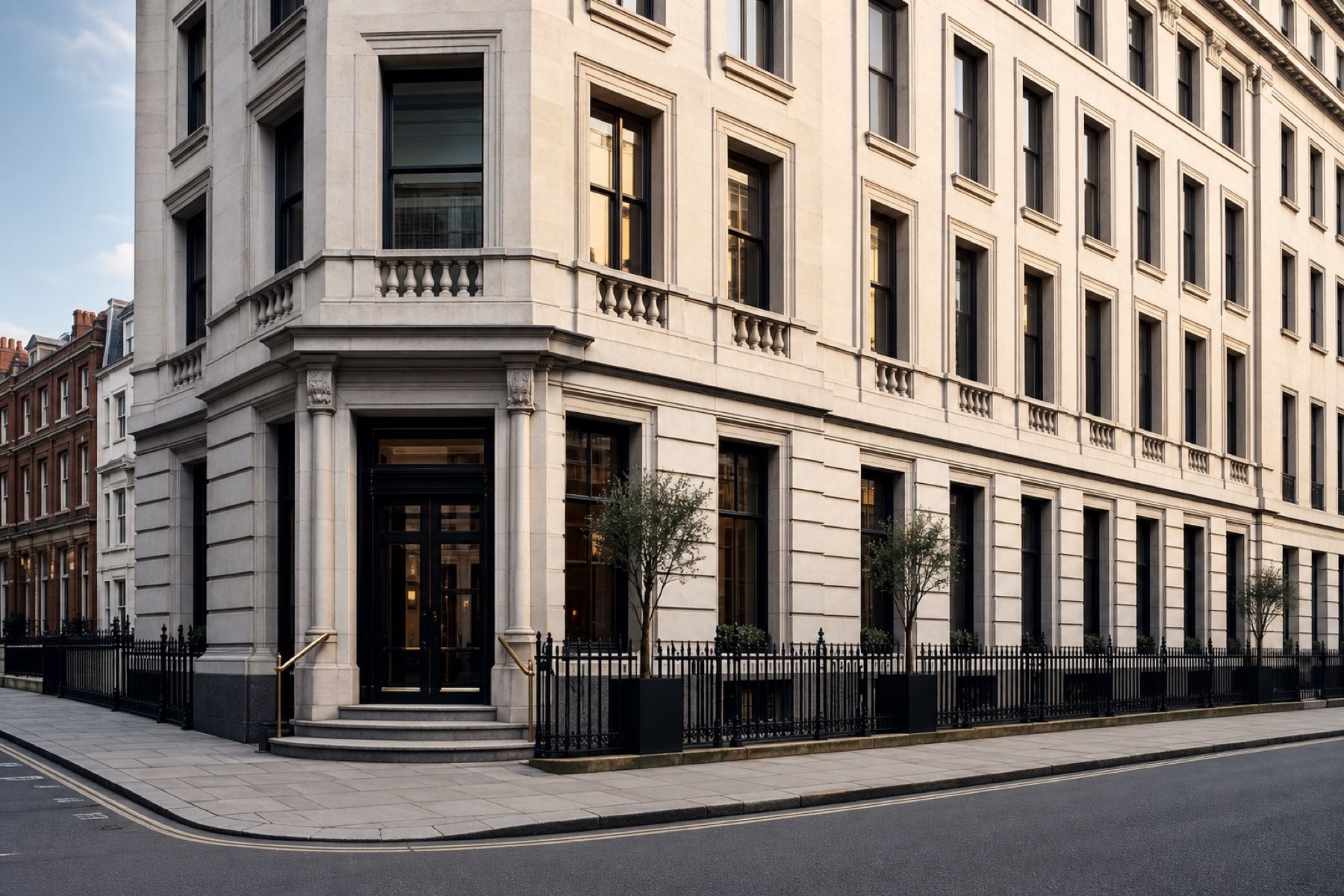
A bridging loan for shop property is short-term finance secured on a retail unit, parade or high street building that lets you complete a purchase, refinance or repositioning quickly and repay later from a sale or a term mortgage. We arrange retail bridging finance for investors, traders and developers through a wide panel of bridging lenders, from specialist lenders to private credit funds.
Retail is a varied asset. A corner convenience store let on a long lease, a vacant unit in a secondary parade and a period building with three flats upstairs are all "shops", yet lenders treat them very differently. Below we explain how lenders value retail, what moves the LTV, and where the regulated line sits when there is a flat above the shop.
Key takeaways
Lenders value let shops on investment value and vacant shops on vacant possession, with a lower LTV for the latter.
Tenant covenant, lease breaks and parade vacancy rates have a direct effect on value and appetite.
Class E lets a shop move between many commercial uses without planning, which supports exits.
If you or a family member will live in the flat above, the loan may be regulated and we introduce it to a directly authorised firm.
Title points such as access to upper parts and flying freeholds can slow retail completions.
)}
How do bridging lenders value a shop?
The valuer starts with the income and the location, then looks at what the unit would be worth empty. For most retail the gap between the two figures tells the lender how much risk sits in the tenant.
Retail scenario
Valuation basis
How lenders view it
Let to a national or regional retailer
Investment value on rent, lease length and covenant
Comfortable, though lenders check break dates and any history of restructuring
Let to an independent trader
Investment value, with more weight on the vacant possession figure
Acceptable, LTV moderated for covenant
Vacant high street or parade unit
Vacant possession value, often on a 90 or 180-day basis
Lower LTV, exit plan scrutinised
Shop with flats above
Commercial and residential parts valued separately, then combined
Strong appetite; regulation depends on who lives upstairs
Whole parade or retail block
Investment value across all tenancies
Good where income is spread across several tenants
Valuers also look hard at footfall, neighbouring vacancies and the parade's tenant mix. Rental evidence for secondary retail can be thin, which tends to push values towards the cautious end.
What LTV can you get on a bridging loan for shop premises?
For standard retail on a first charge, LTV commonly runs up to 70% to 75% where the unit is let or clearly lettable. Lenders usually reduce the LTV where:
the shop is vacant and valued on vacant possession;
the location is secondary, with high vacancy nearby;
the unit is specialist, such as a former bank with a strongroom or a fitted-out takeaway;
the loan sits on a second charge behind an existing mortgage.
Where a shop has flats above, the residential element often supports the overall value well. If you are buying below market value, lenders lend against the lower of price and valuation unless their criteria say otherwise, so see our page on below market value bridging. Check your numbers with the bridging loan calculator.
Why tenant covenant and vacancy matter so much in retail
Retail tenants can fail or shrink their estates faster than tenants in most other sectors, and lenders know it. When you apply for a bridging loan for shop investments, expect questions on:
Covenant: accounts or trading history for each tenant, and whether rent is paid on time.
Lease terms: unexpired term, break clauses, rent reviews and any turnover-linked rent.
Restructuring risk: national tenants that have been through a company voluntary arrangement may have had rent reduced or leases altered.
Security of tenure: whether the lease is protected under the Landlord and Tenant Act 1954, which matters if your plan needs vacant possession.
Empty costs: business rates on a vacant unit after the short exemption period, insurance conditions and security.
A bridge often makes sense precisely because a high street mortgage lender will not lend on a vacant or under-let shop. Our page on vacant commercial property finance covers that in more detail.
Have a deal in front of you?Send us the property and the numbers. We will tell you quickly whether it is fundable.
Class E flexibility: what can a shop become?
Since September 2020 in England, shops sit within Class E alongside cafes and restaurants, financial and professional services, offices, clinics, gyms, nurseries and light industrial uses. Moving between these uses generally does not need planning permission, subject to any conditions on the existing consent. That flexibility widens the tenant pool, and valuers increasingly reflect it.
Some uses sit outside Class E. Hot food takeaways, pubs and bars are sui generis and need planning permission for a change of use. Retail space can also move to residential using Class MA permitted development, via prior approval, where the building has been in Class E use for at least two continuous years. Prior approval considers matters such as noise, natural light, fire safety and the impact of losing certain uses, and some protected areas are restricted.
For lenders, the point is simple: the day-one loan is based on current value, and planning upside supports the exit. If you plan a material change, read change of use bridging finance and take advice from a planning consultant.
Shops with flats above: regulated or unregulated?
This is the question that decides who can arrange your loan. The rule turns on who will live in the residential part:
Situation
Regulatory position
Who arranges it
Shop and flats let to third parties, bought as an investment
Unregulated
We arrange it directly
Owner-occupied shop, flat above let to an unrelated tenant
Unregulated
We arrange it directly
You or an immediate family member live, or will live, in the flat
A regulated mortgage contract if you borrow personally and the flat is at least 40% of the property; we treat any such case as potentially regulated
A firm directly authorised by the Financial Conduct Authority, which we introduce
A regulated loan carries consumer protections and different processes, so it must be handled by a directly authorised firm. We are not directly authorised by the Financial Conduct Authority. Tell us early if anyone connected to you will live upstairs. Our semi-commercial bridging loan page explains how lenders treat these buildings generally.
Typical retail bridging deals and exits
Deal
Why bridge
Typical exit
Retail lot bought at auction
Completion usually due within 28 days
Commercial or semi-commercial mortgage
Vacant unit bought to let
Mortgage lenders want a tenant first
Investment mortgage after letting
Shop with unused upper parts
Fund purchase and conversion of the uppers into flats
Refinance or sale of the flats, retaining the shop
Trader buying the freehold of its shop
Landlord wants a quick sale
Owner-occupier commercial mortgage
Parade bought to break up
Fast purchase, then individual unit sales
Sale of units
Whichever route you take, a bridging loan for shop purchases should run long enough to deliver the exit with some margin. For conversion of upper floors, see commercial to residential conversion finance, which explains how lenders fund works and value the finished flats.
What legal and condition points slow retail deals?
Before any lender releases a bridging loan for shop buildings, it needs clean title. Older high street buildings bring their own title and condition issues. Your solicitor and the lender's solicitor will look for:
Separate access to the upper floors and rights over any rear service yard;
Flying freeholds or shared structures with neighbouring buildings;
Listed status or conservation area controls on the shopfront and signage;
Existing leases of the flats, including long leaseholds that limit your control;
Building condition, including roofs, timber and damp in period stock.
Flag these early. A shop that looks straightforward can take longer if the title needs indemnity insurance or a deed of variation.
How much does a retail bridge cost?
A bridging loan for shop premises is priced per month, and pricing reflects LTV, covenant and location. A lower LTV on a let parade generally prices better than a high LTV on a vacant unit. Budget for an arrangement fee of typically around 1% to 2% of the loan, monthly interest (retained, rolled up or serviced), a valuation fee, legal fees on both sides and, with some lenders, an exit fee.
Most investors buy through a limited company or SPV with personal guarantees from directors. Current pricing conditions are on our rates page.
Unregulated commercial and investment bridging is arranged directly. Any case where the security includes a home you or an immediate family member occupies, including a flat above commercial premises, may be regulated and is introduced to a firm directly authorised by the Financial Conduct Authority. We are not directly authorised by the Financial Conduct Authority ourselves. Your property may be repossessed if you do not keep up repayments on a mortgage or any other debt secured on it.
Can I get a bridging loan for a shop with a flat above?
Yes. Shops with flats above are popular with bridging lenders because the residential element supports value. If the flat is let to an unrelated tenant or left empty, we arrange the loan directly. If you or an immediate family member will live in it, it may be a regulated mortgage contract, so we introduce you to a firm directly authorised by the Financial Conduct Authority.
Can I bridge a vacant shop?
Yes. Vacant retail is a common reason to bridge, because many term lenders want a tenant in place before they lend. The lender values the unit on vacant possession, lends a lower percentage than on let stock and wants to see how you will let or sell it, such as letting agent advice and comparable rents.
Will lenders fund a shop let to an independent tenant?
Generally yes. Independent tenants are the backbone of many parades. The valuer will put more weight on the vacant possession value than for a national tenant, and the lender will look at the tenant's trading history and rent payment record. A longer lease and a sensible rent level both help.
Can I use a bridge to convert the upper floors of a shop into flats?
Yes. Lenders can fund the purchase and, with a refurbishment facility, the conversion works. The planning route may be full planning permission or Class MA prior approval where the space qualifies. The exit is usually a refinance or sale of the flats, with the shop retained or sold separately.
How quickly can a retail bridging loan complete?
A straightforward retail bridge can complete in two to four weeks where valuation and legal work move quickly. Auction purchases are planned around the usual 28-day deadline. Complicated titles, flats with long leases or listed shopfronts can add time, so send the legal pack early.